While drywall installation is a common DIY project, it requires precision and the right tools to achieve professional looking results. Whether you’re renovating a room or repairing damaged walls, knowing how to cut drywall and what tools to use can save you time, money, and frustration. In this comprehensive guide we explore the tools needed for cutting drywall and talk about techniques to use to complete your project.
Must-Have Drywall Cutting Tools
Every drywall project begins with having the right cutting tools. While professionals tend to have some specialized equipment, homeowners can usually get away with having a few basic tools.
Utility Knife: Perhaps the most important tool for cutting drywall, a utility knife allows you to make clean, straight cuts when used properly. When used with a T-square, you can achieve professional-looking edges that won’t require additional sanding. Always check that your utility knife has sharp blades, as dull blades tear the paper rather than cut it cleanly.
Drywall T-Square: As this drywall tool is in the shape of a “T”, it is often used for creating perfect 90-degree angles. Most T-squares are 48 inches long, so they match up with the standard drywall sheet widths. Professionals and homeowners find them useful for making long, straight cuts. Some models feature adjustable heads for cutting at different angles, which is particularly useful when working with slanted ceilings.
Jab Saw or a Drywall Saw: A specialized saw for cutting small shapes and openings in drywall, such as holes for electrical outlets or light switches. The pointed tip allows you to pierce the drywall in the middle of a sheet, allowing for cut-outs rather than edge cuts. However, jab saws aren’t recommended for long cuts, as their narrow blades make it harder to maintain straight lines.
Power Tools: While manual tools work well for most drywall projects, power tools speed up the process and provide cleaner cuts.
• Reciprocating Saw: While you will need to drill a starter hole first this saw is great for cutting out electrical boxes or curves.
• Oscillating Multi-Tool: Not nearly as aggressive as a reciprocating saw, an oscillating multi-tool provides precise control for detailed cuts.
• Hole Saw: A circular attachment for electric drills that create the best circular cuts for light fixtures.
How to Cut Drywall
Cutting drywall involves using a few basic techniques that help you achieve clean, professional results.
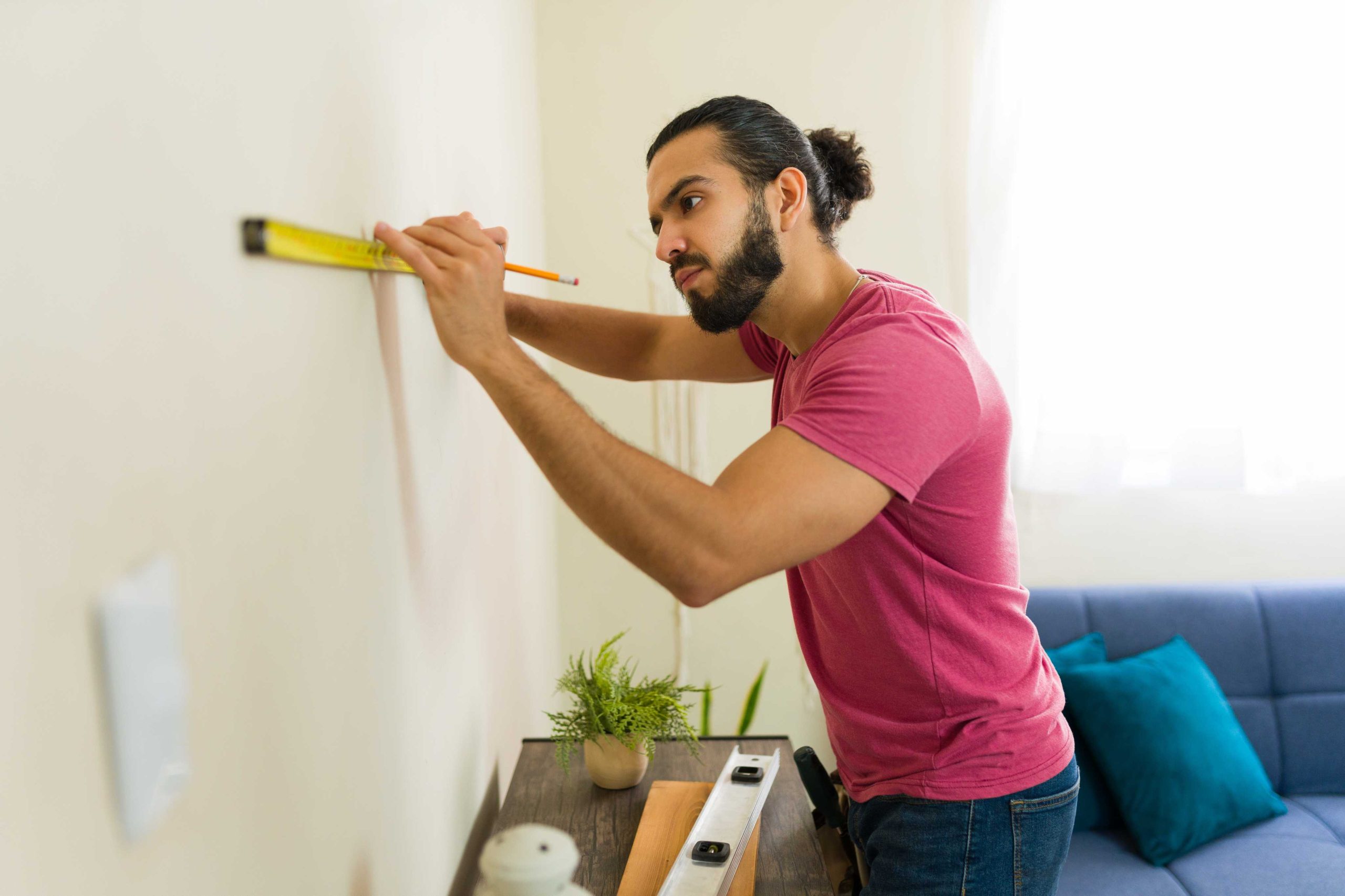
1. Accurate Measurements: Start by measuring the space where you are installing the drywall. When measuring the area, you want to get the height and width. You also want to take note of the locations of any doors, windows, or electrical outlets. While mistakes do happen when taking measurements, the best way to prevent any issues is to measure the space two times before making any cuts. For the best results, make your cuts about 1/8 inch shorter than the actual space to allow for adjustments and expansion.
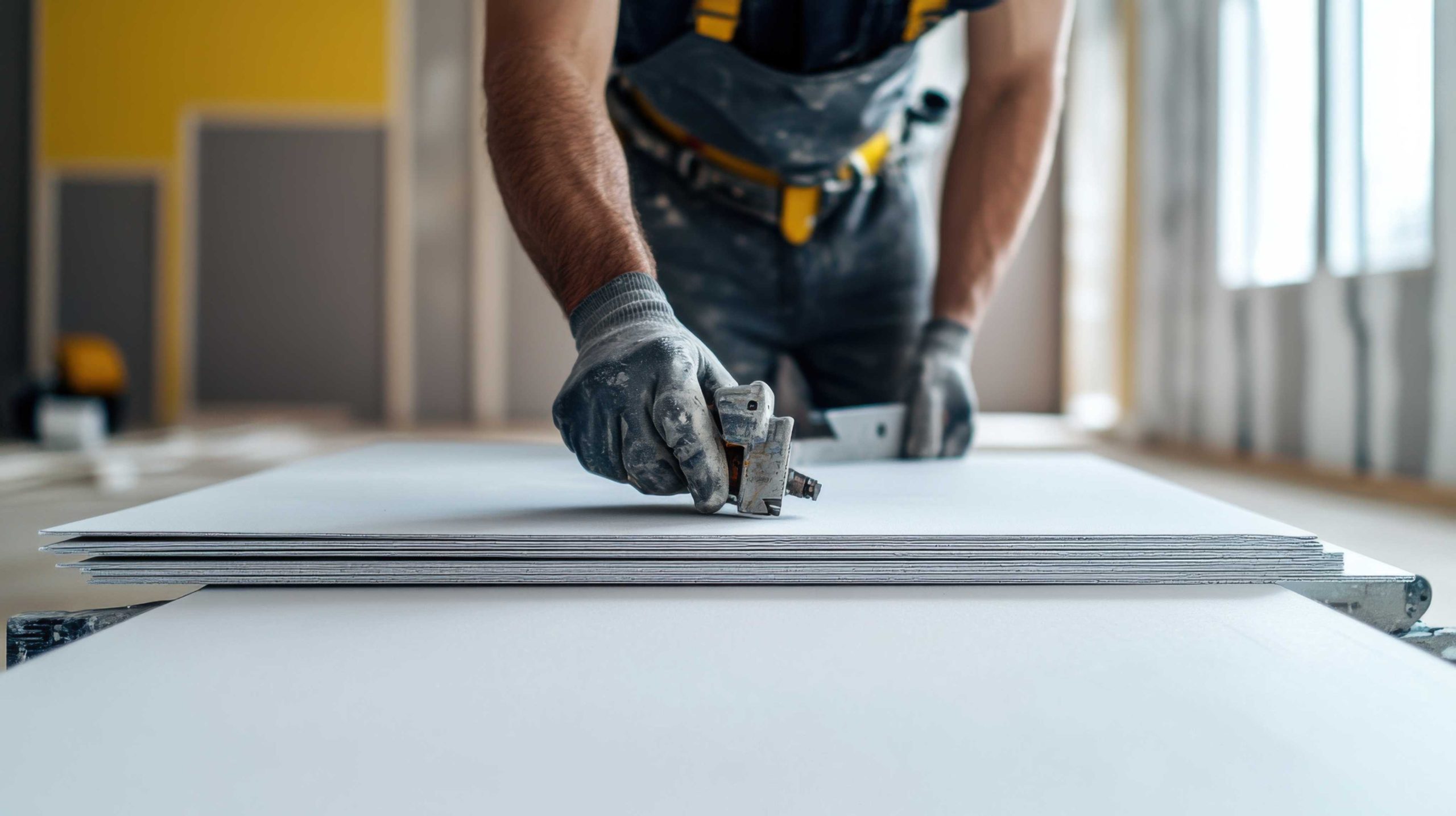
2. Score, Snap, and Cut: The most common technique used for cutting drywall involves three steps.
o First you want to score the front paper along your marked line using a utility knife and your T-square.
o Second you want to snap the gypsum core by applying some pressure along the scored line.
o The third and final step is cutting through the back paper to complete the separation.
3. Cutting Openings: For cutting out the openings for outlets and fixtures, you have two options.
o You can pre-cut the openings before hanging the drywall by measuring and marking their locations.
o Or you can install the drywall first, then mark the centre of the opening, and then cut it out using a jab saw or a multi-tool.
Does Home Depot Cut Drywall?
While Home Depot sells drywall sheets and the tools needed to cut them, they do not offer drywall cutting services. Unlike lumber, which is often cut to size in-store, drywall requires specialized handling and creates significant dust, making it impractical for in-store cutting. Homeowners will need to transport the full-sized sheets and cut them at their project location using the appropriate tools.
Safety Considerations
When working with drywall, safety should always be a priority.
• Homeowners should wear a respirator, not just a dust mask. This is to protect your lungs from the fine gypsum particles that are released when cutting drywall.
• Wear safety goggles rather than glasses to prevent any eye irritation from the airborne dust.
• Turn off the power to all electrical circuits when cutting around any outlets or fixtures.
• Use a contactless circuit tester to verify that the power is off before cutting.
From building new walls to making minor repairs, using the right tools and using the proper cutting techniques you can achieve professional-quality results while saving time and reducing frustration.