From crumbs, spills, pets and simply being sat on sofa cushions go through a lot. But most cleaning advice stops at “give them a good vacuuming and wipe them with a damp cloth.” While these basic cleaning tips might be enough for some couches, there are few other steps you should take when cleaning your couch cushions. These ‘extra’ steps make all the difference between a clean couch and one that looks dirty and smells musty, within a week.
Read the label before you reach for the sponge
Every sofa sold in the UK has a fabric cleaning code, usually hidden under a seat cushion or along a zipper. To clean your couch cushions, you need to understand what each of the cleaning codes mean. W means a water-based cleaner is safe. S means solvent only and no water at all. WS means either will do. X means no liquid cleaning of any kind, so vacuuming is your only route. Ignoring these codes is how people ruin their upholstery. Water on an S-coded fabric can leave permanent ring stains.
Match the cleaning method to the filling
The filling inside the cushion is just as important as the cushion covers. Feather and down should never be soaked. The filling clumps together and you end up with cushions that smell damp for weeks. Foam filling is quick to soak up water, but dries slowly as it goes from the middle out. If you try to rush the drying process you run the risk of the foam moulding. Hollowfibre goes flat if it is wrung or spun too hard. If your covers unzip, it’s best wash them all together even if only one looks dirty. Only cleaning one cover can leave it a slightly different shade from the rest.
Be careful of hard water
A lot of areas in the UK have hard water, and it makes cleaning your sofa even worse. Hard water contains a lot of dissolved minerals which means your cleaner won’t lather up as well. The dissolved minerals also leave behind dry chalky marks on darker coloured fabrics. Use cooled boiled or distilled water rather than water straight from the tap on your final wipe.
Treat stains and odours carefully
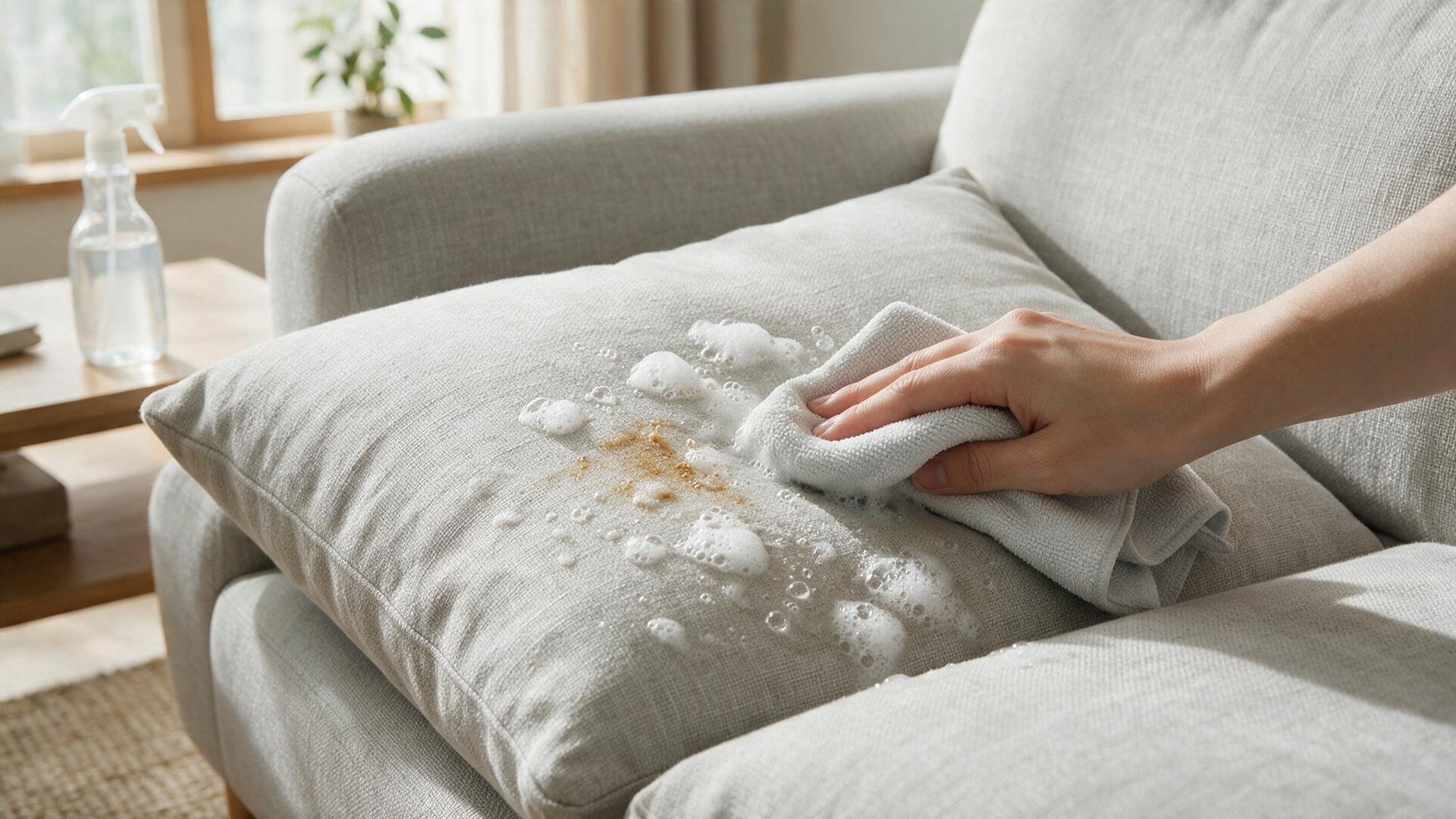
Test any solution on a hidden seam first. Test the solution by pressing a damp white cloth to the fabric to make sure the colour doesn’t lift. When treating stains, always work from the outer edge inwards so it doesn’t spread into a ring. Always blot the stain rather than rub it. For stale smells, sprinkle baking soda over the dry cushions. Leave it to sit for an hour or two and then vacuum it off. Nothing freshens up your couch cushions like taking them outside on one of those dry, breezy British afternoons. Even just an hour outdoors is better than any spray, as moving air and daylight lift odours naturally.
Don’t forget about drying your cushions
Drying is the hardest part of cleaning cushions, especially in damp homes. Air your sofa cushions out in a well-ventilated room. Don’t try drying your cushions on a radiator as that can burn the cover or even warp the foam filling. To prevent any musty odours never put your cushions back on the couch until they are completely dry. Flip and rotate the cushions each week so ensure any wear and fading spreads evenly.